stars drift. driftwood ambles the crowded surface. whence we came running, where we go mad as hornets seek shade at the desert’s
edge—in the melting tundra of our just- desserts we grease into shape, call the distance from back then to scattered now, falsely, far
E.G. Cunningham is the author of Ex Domestica (C&R). Her work has appeared in Ambit, Colorado Review, The Gettysburg Review, The Nation, Poetry London, The Poetry Review, and other publications.
“Please, Mam,” Mia begged, pulling on Sam’s arm. “Please, please!”
Around them the fairground wheeled, whirred, whooshed. Children, adolescents, adults ate macaroons, milky ways, mars bars, matchmakers. Sam tasted the sugar on her lips and thought of all the nurse’s warnings.
“No candyfloss today,” Sam sighed. “How about we go on the flying chairs instead?”
“But Mam, everyone gets candyfloss on their birthday!”
“I know, honey, but it’s different for you,” Sam interrupted. Mia slumped. Guilt made Sam’s stomach churn. “Come on.” She took Mia’s hand and dragged her towards the flying chairs.
The scent of caramelised peanuts wafted on the air, making Sam nauseous. It hurt her, viscerally, to act so strict.
The carousel, playing a discordant tune, creaked into action. The elaborately carved and painted horses carried children with beaming faces, and, watching them, Sam stopped.
“You know what?” Sam asked. Mia didn’t look up. “I think we can make an exception. It is your birthday, after all.”
“But what about the diabetes?” Mia asked in a small voice. She pronounced it slowly, distinctly: die-ah-bee-tees. Like a foreign word.
“The doctors showed us how to adjust your pump for meals, didn’t they?” Sam said. Mia’s hand reflexively went to her jeans pocket, where the corner of the insulin pump could be seen. “Come on. It’ll be fine, I promise.”
Mia was quiet, the gears in her head turning. Then she erupted.
“Okay! Thank you, thank you!” Mia exclaimed. A radiant, gap-toothed grin exploded across her face. Thrilled at her happiness, Sam couldn’t help but pick Mia up and twirl her around. The fairground blurred into one bright, overwhelming kaleidoscope around them, and Mia and Sam howled in joy.
The candyfloss was pink and blue, a sparkling nebula of sugar. Sam took photos of Mia holding it, her ninth birthday badge displayed proudly.
More photos: Mia on the helter-skelter; Mia and Sam sharing fresh doughnuts; Mia with a candy apple; Sam holding Mia, holding an oversized dolphin toy won at the coconut toss…
In the background, the fairground: throbbing, pulsing with life; tempting them into a giddy sugar rush.
The fairground blazing around the blue-lit paramedics racing towards Mia’s candyfloss coma.
The fairground pounding as Mia’s brain blew into a bubble-gum sugar bubble.
The fairground dancing, alive, alive, as Mia’s heart stopped beating, and she was dip-dap, double-decker, dolly-sweet dead.
Sam screamed sherbet starburst sugar-cane sorrow.
Reader, writer, thinker, and constant coffee drinker. If not doing any or all of the above, she has probably phased out of existence. On Twitter at https://twitter.com/MelissaLeoD
My anger put its arms tenderly around me when they burned my mother at dawn. My anger looked for faces, details, tattoos, names, badges, any identifiable information when I was too terrified to speak. My anger said it was wrong, it’s wrong, they burned a woman without trial or proof, they burned her, they destroyed her, they took her.
My anger holds me now that my mother cannot.
“Anger is corrosive,” said the woman pretending she was a saint for taking me in. They — the ones who burned my mother at dawn, the knights and witch hunters and other self-congratulatory names — put me with her, saying she’d raise a good woman of me. I broke all of her plates and stole all her silver butter knives during my teenage escape from that house that smelled of ash.
My anger kept me warm on the long, cruel days and the endless hungry nights while I fled.
My anger is the only reason I am alive.
Like a little flame on a windy day, sometimes it is a fragile thing, but my anger lives on, as stubborn as I am.
They burned my mother at dawn. Before they die, they will realize they should have burned me.
###
I had no idea how to go about becoming the witch they thought my mother was when they killed her. I had only bad examples from propaganda and fear mongering to guide me, and the anger inside me said that they were wrong. But I was a weird little girl blossomed into a stubborn teenager — what I lacked in knowledge I made up for in commitment.
My mother has friends. Had friends. They burned my mother and they burned her home but they couldn’t burn the knowledge from my brain. My mother didn’t like to write her own letters, so she had me take care of it. Writing, addressing, passing to the postman.
So I go down a list.
The herbalist takes some of the silver butter knives in exchange for food and a few poultices, but there ends his involvement.
The alchemist takes the last of the silver butter knives and lets me take clothes and a new pair of shoes from his trunk. He offers me a place as his servant, but refuses to let me learn his trade, and so I leave. I take my stolen silver butter knives, and his wide brimmed black hat in recompense for wasting my time.
The last is the furthest away, but the most promising. A witch, my mother used to whisper to me, scrunching her face up to be mischievous. Waggling her fingers, then drawing on wrinkles with soot from the hearth. The woman I picture is ancient and shriveled.
A young woman answers the door instead. “Mother said you’d be coming,” she says. She’s the most beautiful thing I’ve ever seen. Daisies weaved into her braided hair so neatly it was as if they’d sprouted from her scalp too. Kind eyes. Too kind. “Come in, you must be tired. I’m sorry about your mother.”
I mumble something as I shuffle in. I don’t know what it is.
“I’m Amicia,” she says.
I mumble something approximating my name, and she shuts the door behind me.
###
Amicia makes my anger quiet. She’s beautiful. She’s terrible. The witch is her mother, indeed ancient but not yet shriveled, and the witch insists on teaching us together if anyone is to be taught at all. Amicia doesn’t want to learn the things that I want to learn. She wants to learn gardening magics, she wants to learn how to help trees grow, she wants to learn how to convince aphids to coexist within a garden rather than destroying it.
I want fire. It’s all I want.
“The weapon of the enemy against them,” I say, when the witch narrows her eyes at me.
“This is no easy thing you seek to do,” the witch says. “It will take time. There are easier magics.”
I want fire. I want the fire.
The witch only sighs. “Then you are determined that your path leads to fire,” she says. “I only hope it does not burn away other paths before you can see them. We will begin.”
###
The witch works me hard. There is no proof, she says, that I have magic. Willing it to be so will not make it so, I must have innate talent. The trick is unlocking it, but it may not be fire. Despite her warnings, I demand she teach me about fire. Only fire.
So she does. About what burns, what doesn’t. Why some things do, and don’t, and why some do better than others. How a fire breathes, how it burns, how it dies.
She places my hands around fire, tells me to breathe with it, and stay on that point where it just doesn’t burn me. It singes, and sometimes it stings, and often at night I cannot sleep for the feel of searing heat against my flesh. It is a tenth, if that, of what my mother felt.
At night, lying away in my petty agony, I wonder what my mother’s crime could have been. To be torn from your house, tied to a stake, and burned at dawn, it had to be something bad, right?
Or maybe not bad. Dangerous.
Yes, dangerous to the wrong people.
I was young when they burned my mother at dawn. The images that I can conjure of her face seem to have a halo of golden light around her face, and she always smells faintly of fruit pie and lavender. It’s not a true rendering, it’s not a true feeling, but sometimes I imagine her worst crime was smiling too much. Or maybe she was too pretty, and it made all the noblewomen jealous. Or maybe she had dangerous ideas, like stealing from the rich to feed the poor or starting a home community garden.
Maybe, I think, she was the best woman who ever lived and they killed her for being too kind. That’s their mistake, I tell myself, like a lullaby. They killed the nice one. Now there’s just me.
Would my mother be disappointed in me? I lie now. I steal. I tell myself that it’s to live, but it’s fun too. They should have burned me at dawn for that, I think.
But they didn’t. Their crime, I decide, is that they’re stupid in their cruelty.
Tonight, I lay awake with Amicia sleeping pressed to my side. She breathes gently, untroubled. I twirl one of her curls around my finger and imagine what I would do to anyone who came to tear her out of this bed and tie her to a stake. When I finally sleep too, I dream of them screaming, cowering away from me.
###
The fire won’t heed me. Every time I try to influence it, it pulls the other direction. The witch tells me that is a kind of progress, that if I was truly hopeless at it then the fire wouldn’t move at all. I sulk, because fire is always moving, but I keep trying.
And trying.
And trying.
But I fear the fire. I don’t want to admit it, but I do. Ever since they burned my mother at dawn, I’m afraid of dying like she did. It’s holding me back.
I burn my hand on purpose the day I realize that. The witch sends me to bed early and won’t let me train for days.
###
I don’t know how it happens. Amicia becomes a fixture in my life by proximity — in space, in age, in power. She grows me flowers. She cooks me food from her garden. All I have are my arms and my body and my warmth, and I hold her because she wants me to, and somehow that’s enough for her to fall in love.
She wants to run away together, start a life where no one knows us.
I tell her no.
She doesn’t want me to hold her after that.
###
“Do you even remember your mother?” the witch asks abruptly one day. “Or has your anger burned all that away?”
The insinuation burns. I am doing all of this for my mother. I —
I remember her.
I remember.
Screaming as the flames licked up her dress, dancing up to her hips. Her laughing, cackling. The flames surging in a rush, shooting taller than the trees, burning bright, bright, gone. The smell of ash and cooked meat and —
“No,” the witch says. “Not that. Not only that. Your mother was not what they made her, she was bright and loving. Her memory should warm you like a campfire, not burn you too. That’s why the fire will not help you, why you cannot wield it. And you won’t until you can see through it. Now tell me one thing — just one thing — about your mother that has nothing to do with how she died.”
I think.
I try to, anyway.
But I leave the room without answering and slam the door shut behind me.
###
My mother didn’t wield the fire that killed her. I don’t need to either. I need to unleash it, like she did. End lives — their lives, not mine.
Maybe that’s what the witch wants to teach me with her question.
But without anger? Was that really how my mother died? Was that really how she lived? I cannot imagine it.
Maybe she was angry. Maybe that’s why they burned my mother at dawn. Maybe she cursed them, and they’re all dead already. Maybe they hated her because she saw them for what they are, and she hated them first.
Maybe her hate burned as brightly as mine does.
###
They come to the village by chance. It doesn’t matter to me what brings them, only that it is them. With their armor and their sigils of fire and thorn brightly emblazoned on their chests. They march in, kick over food carts, act like bullies while townspeople scream, and then announce that they are here to save them from evil. They declare martial law.
They declare they are here to hunt witches, and they will burn any they find in the town square. They begin to build the pyres almost as soon as they enter, even before they finish saying that law abiding, god-fearing folk have nothing to fear.
###
Amicia is scared. I encourage that. I help her pack, I make her pack. I grab her by the front of her shirt and I pull her out of that home, the only home she’s ever known, and tell her to run. I tell the witch to hide them both deep in the woods and never to come out again.
I turn to go, and Amicia grabs my wrist.
I pull away.
She calls my name.
I pause, look back.
She reaches for me, and I turn back to where the witch hunters wait.
Amicia doesn’t follow me.
###
They don’t notice me at first. Then they laugh.
“A witch, come to confess!”
I don’t have a plan. The fire, the witch warned, is a fickle weapon. She warned me to be careful it does not burn me too. She warned me for Amicia’s sake. But here I am, stopped before them, the girl who shouldn’t be. My only weapon, should the fire fail to come, is a butter knife.
I press the pad of my thumb so hard against the silver butter knife it cuts. Sharp, stinging pain, then the welling of hot blood.
No, hotter than blood.
As if I am holding a coal. Light so bright I can barely see their faces, their bodies beyond it. It catches my skirt, climbs up my leg, dances around my side. I lift my hand, and it swirls up with me, searing my sleeve away with it.
The fire is mine now.
I smile.
And we burn.
Victoria Zelvin is a speculative fiction author living in Washington D.C. Her work has appeared in various magazines and anthologies. Find her online at victoriazelvin.com or twitter @victoriazelvin
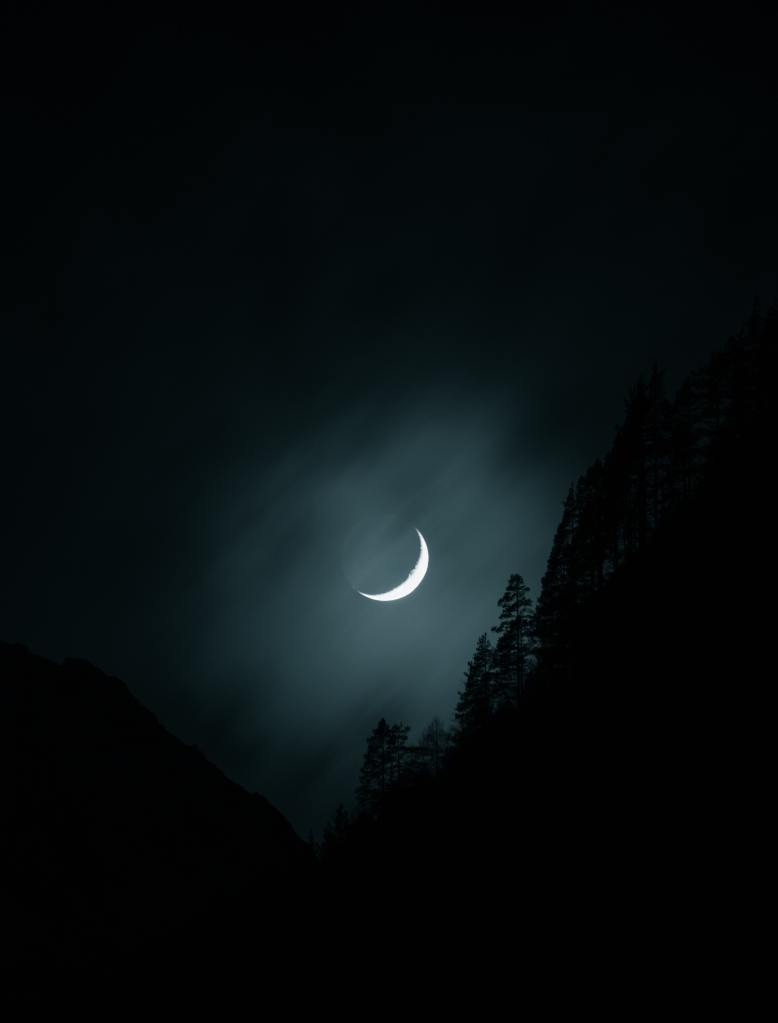
The moon that sits high in the sky, she is me. A complimentary, lighter version who sits in the crux of a version of me that people touch to see if the soul beneath my brown skin is primed in white. I wonder if my soul is white in color? Or is it like glass? Translucent— reflective a multitude of colors, a rainbow molded by my experiences
My name is Sekinat Adekanbi, I’m a Poet, Aspiring writer SFF Horror with a dash of romance and penchant for writing Fantasy for LGBTQ+ youth and adults! Twitter and Instagram: sadisticaurthor
Does summer know that it hangs on Like a drunken party guest? Through rain and fog it lingers still, A faded tattoo of the past.
Though years may pass and seasons change, As autumn leaves and winter fades, One thing stays (and though it’s strange –) A quiet smile and eyes like jade.
You’ll never really leave, I know Though the light fades and the sky grows cold And the trees grow pale and old A part of me just won’t let go. (I’m waiting for a ‘told you so’.)
Does summer know that it hangs on, Like a drunken party guest? Your echo sleeps in my room still (Though, perhaps, it’s for the best.)
To My Person First Off, let me preface this by saying I Love You But the curious side of me begs the question Why do you see yourself as incarceration? When you, my butterfly, are freedom You are THE African savanna You are star filled skies You are warm blankets, rainstorms and books And nowhere to be You are not isolation my love You are deep breaths and early morning dew Summer times when schools out Ice cream on hot days Laughter when all you’ve known up until then Was sadness And joy was KIA on your lips You bring absolution of heartache You aint burden You peace Even when you, yourself, don’t realize it I guess I’m as much to blame as anyone Missed communication and crossed wires Leave you feeling less than In a constant state of anxious upheaval That can only be soothed by arms wrapped around you Deep strokes inside you Fingernails scratch arguments in my back As you accept my apology One round..two rounds…three Out of breath But more apologies to go
Twenty three years was all it took ethinylestradiol desogestrel subtle hymnal sweetly sung praying the flesh to sleep –
but the body knows the body. No ink is indelible. da capo new songs write themselves.
By day, Louise Norgate is a complementary therapist: by night, a tarot reader, moongazer & writer with poetry published in Acropolis Journal. Her words are on Twitter @LouNwrites. She likes the dark.
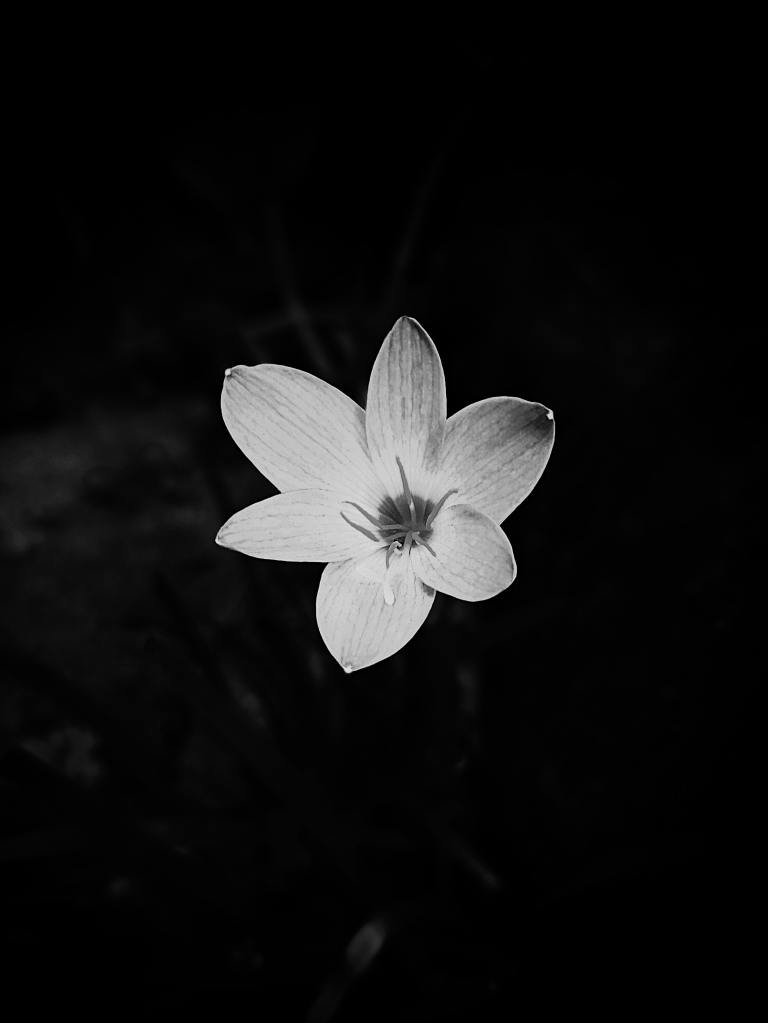
The most beautiful flower that ever existed was a lavender rose the size of a human heart. It was also terribly poisonous, so that all around it, the grass had turned black, then brittle, then blown away on a breeze. Admirers would come from all around and, from a safe distance, happily sketch the flower’s likeliness in colorless greys. There was one visitor, however, more determined than the rest. He stole across the moonlight, plucked the flower from its stem, and hurried home to show his lover. By dawn, both were dead, and the field was overrun with weeds.
I am a recent graduate of the University of Virginia, and an MFA candidate at City, University of London. Twitter: @_BlakeSnow
I’m in the meeting but really I’m rafting naked down the cataracts of my mind, diagnosing myself with cancer, attending a private viewing of my ‘most embarrassing moments’ highlight reel, wondering what happened to the girl who called me, “Betsy Bitch-ards” in middle school. Then they’re all looking at me and I have no fucking clue what’s happening in this room but I take a measured breath and say, “I feel this is part of a higher level conversation we need to have outside of this meeting.” The boss raises an eyebrow, impressed. The sales director nods in vigorous conviction. The event coordinator looks confused for a moment, but quickly twists her expression into one of assent for fear of being seen not-getting-it. I return to my raft. I’m telling you; it works every time.
Emily Baber lives in Cleveland, Ohio and is drawn to Lake Erie, the intricacy of natural systems, and snacks. She is drafting a novel. Twitter: @enemybaber
My son will be reading the memorial scholarship for today’s program. My mother cannot read the description and hands the script to me. We had revised it across several nights when I was home from college. She always said it is my duty to help these kids pay for college.
I read the write-up as prepared:
Teressa French loved everyone, she strived to help all her peers in and out of the classroom, chapel, and the soccer field. She was a presence of peace through her words. Children flocked to her because she cared. She was taken into Heaven on January twenty-fourth, two thousand and fourteen. This scholarship is given in memory of a student living in Teressa’s example. Please come up to accept this award.
Applause fills the room as I step to the side and hand my mother the certificate with the student’s name on it. Parents in the room dry their eyes while taking videos with their cell phones. Some club members come up to us after the program. That was beautiful. You did an excellent job helping your mother at the end, they tell me. I go through the usual pleasantries that I am always happy to help. He gets the strength from his father’s side. My youngest child read at my mother’s funeral; she tells them. They are a wonderful part of my life.
My mother met with Teressa’s mother a couple of weeks before the program. The other women in the club wanted to start a scholarship in Teressa’s memory and sent my mother to talk to her. When they talked to her about it the first time, she cried. My mother and Teressa’s mother cried over tea and books talking about Teressa who had been killed in a hit-and-run a year before. The driver did not face serious jail time because he wanted to join the Navy and was so, so sorry.
She’s the same age as your younger sibling, she tells me after. You never really get over the death of a loved one. It was hard when Grandma passed. I couldn’t imagine losing one of my babies.
Editor who has an infatuation with horror and fantasy that has only grown with age and a mild-to-moderate obsession with Eve and Genesis 2-3. Twitter: jxmsxne____
I want to pull him out of his clothes and ask him to sit in the bathtub. I imagine him there cross-legged; not hard, not self-conscious about me seeing him soft.
I want to tip his head back slightly, gently into the shower stream. Kneeling behind him as he closes his eyes. A good shampoo—sweet-smelling but sharp, peppermint or grapefruit or something like that.
I want to comb the lather through with my fingers and rinse it out again and again and again, my nails firm against his scalp but not too hard.
I want to take a long time with it, neither of us saying anything, just the white noise of the water like rain.
I want to watch the suds slide down his back, iridescent and crystalline, melting away.
I want him to trust me. I won’t get soap in his eyes.
I want him to tell me it felt good, or nice, or if he had a bad day even just: better.
I want his skin to be warm and his hands all wrinkled; mine too.
I want to get into bed and hold him, facing each other on our sides. My arm around him so my fingertips can kiss each vertebra up and down his spine. My head against his chest so I can feel his heart like the sure wingbeats of a great bird soaring.
I want him to fall asleep like this, and later me too, after I lie there a while, listening to his steady breathing, looking through the benevolent dark at his beautiful hair, drying against the pillow, strong and safe.
I want to tell him I love him quietly enough that he might hear it in his dreams.
Rachel Anne Cantor is a children’s book author and works in academic publishing. She lives in Brooklyn.









 Unstamatic