They called me a cruel monster for what I did. But I know I am the heroine.
His honey eyes opened to a demonic angel’s face hovering above him.
“NO!” Warm red lips he once used to kiss me with gentle love, turned harsh, cold and blue. Golden hair surrounding his heart shaped face flew into the stars scattered on the darkest of nights. His plump cheeks grew hollow as skin and muscle wasted away.
She left us worse than she found us and I could do nothing.
For beauty gave way to reckless desire and the ultimate price paid.
I double majored in English and Communication at UCSB. You can find me on Twitter @wctwrites.
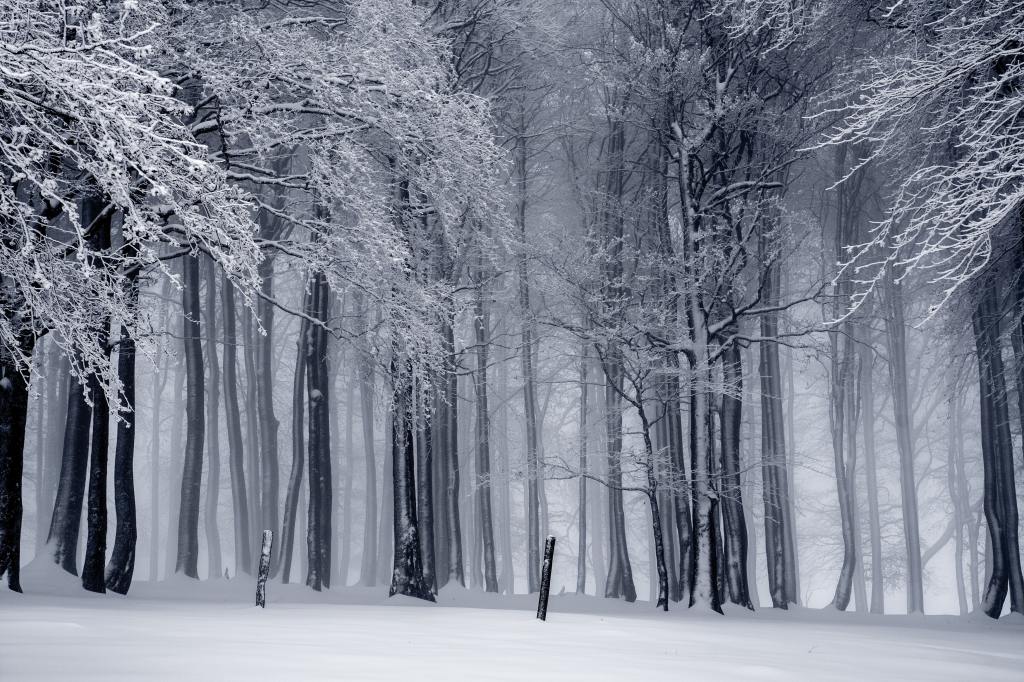
To say that this thought suddenly hit me would be a lie: I think had always lingered there, deep in the recesses of my subconscious. Covered under the primary sensations, the physical. The roaring of the wind within my ears. The slow numbing of my fingers. I buried the feeling under my attempts to survive. The relentless shivering. The need to find shelter, the desperation to drive the freezing away as my limbs fell prey to its embrace.
But now, as the ice’s grip had carved its way into my very core, I found myself forced to finally acknowledge it—I’m going to die.
Out here in the wretched frost-lands. I was alone, far from anyone and anything I ever known, abandoned and left to die. Forsaken. My remains would probably amount to nothing more than food for the polar bears…Or worse…
Finally, after walking for as long as I could, I finally made the decision I never thought I’d make. Closing my eyes, I sunk backwards and sank, or collapsed, into the ground. Again, that thought swam across my conscious mind, above all the physical pain. There was no way I was going to survive this ordeal. So why bother? I wasn’t going to waste my last moments trying to work up a sweat in this wasteland, anyway. That same thought was still etched into my brain.
I’m going to die.
Throughout my entire life, death always seemed to be that one, elusive certainty. The one fact that lingered in the far reaches of mankind’s collective unconsciousness, always there, but eternally intangible. I still remember the day it took my brother, Ichabod: I was a boy, then, caught in the ever-present euphoria of youth. Back then, when everything tinged with an exotic, exciting glow. It claimed him quick—the cold grasp of that frozen lake had laid claim on him before Mother or Father could react. It dragged him down, its waters filling his lungs, strangling them, depriving him of oxygen. Striking him down at the prime days of his youth. His life taken from him by nature’s chill.
Huh, just like me.
I felt the corners of my mouth erupt into a wide smile at the thought, and a new sensation, a warmth, spread itself up from my lungs. Laughter. I doubled over, savoring the fleeting moment of rare, blissful joy as it erupted, through the burning in my limbs as they succumbed to the frost. Had Ol’ Ichabod experienced the same thing in his last, fleeting moments? The thought had to be the most hilarious thing in the world.
“Are you happy now, Ichy?” The words escaped me. At this point, etiquette didn’t seem to matter. “Father always said we were two peas in a pod!”
Death had claimed him, and now He had His sights set on me. I closed my eyes. There, in that sheltered space, I could feel a lifetime pass by. The time after Ichabod. All those days we spent in the church afterwards, after Father made a promise to the Universe, and he dedicated his time to that small brick building. My father found religion that day, when the reality of death stared him down under the veil of Ichabod’s corpse. I remembered the pain in his eyes, all those days he spent in the pews. I think he clung to religion to escape it, the reality that all of mankind’s paths led, ultimately, to that same end. What would Father say now…?
“Gabriel, do you believe in God?”
I still remember the time when I doubted if there was an answer to the question, back when I first started at the Academy. Even there, the finality of death seemed to linger in my classmates. All those questions, discussions on philosophy, science; all pondering the answer to that question. It was the reason I sought out on this journey. To find the answer in the depths of the wilderness. And yet here I was, sitting here, staring at my eyelids, my ears burning from the cutting wind, about to finally understand what it meant to die, to meet whatever maker lied beyond… Those pompous bastards at the Academy will certainly be jealous that I know the answer and they don’t! It serves them right.
Of all the travails this wretched place had wrought, that was the one bright side: That ultimate epiphany, born through the frost. As I felt the finally wisps of my physical surroundings begin to fade, I felt myself growing closer to that one, eternal truth. I had tried to find God, and now He was going to find me.
And still, the earth would rage on.
Aaron has always loved the process of creative writing for as long as he can remember. His ultimate goal is to become an author.
I love being from the South. The land is so beautiful and rich, and I couldn’t imagine being from anywhere else. I love how kind people can be; the way everyone seems to smile back at you and how all your neighbors remember not only your name but also the names of your dogs and your little cousin that likes to spend the weekend at your house. I love the way everyone says “good morning” during your walk and how even the squirrels seem to greet you as you pass. I love the sudden summer storms; the way the rain smells. The way the thunder sounds. The way the wind rips across your face as you run home from the park, trying not to get caught in the downpour. I love the food and the creeks and the forest and the excitement I feel when there’s a wild rabbit in my backyard. These are things you can’t get anywhere else. At least not all together.
I also hate being from the South. I hate the way white people stare at my family and I when we’re the only Black people in a restaurant. I hate the looks my white friends get when they’re hanging out with me, a dark stain on their otherwise pure image. I hate the anxiety that ensues when being pulled over. The way the entire car silently keeps our hands in our laps and the way we yes ma’am and no sir the officers; perfectly submissive as an act of survival. I hate the names I’ve been called. Mutt. Nigger. Monkey. Black bitch. I also hate the way I’ve been called more beautiful than my darker skinned sisters. Light skinned princess. Pretty curls. Brown beauty. I hate that my people are still seen as less than by so many.
Recently, one of my professors emailed me and told me that she was surprised by the way I claim the South as my home despite the hardships that I’ve had to face as a result. And, honestly, I’ve come to the conclusion that that land is my birthright, like it is for so many others. My Native ancestors are the original cultivators and protectors of that land, and I feel it is my responsibility to return and take care of it as well. To uphold their values and recite their wisdom. My Black ancestors were brought to the land to continue that cultivation and protection. Out of their hardship, they created something so wonderful and beautiful: what is now known as the Gullah Geechee Nation, with our own spiritual practices, language, and culture.
I think this is something a lot of Black people, specifically from the South, have to come to terms with at some point in our lives. On one hand we drive through the country and wonder how many of these trees our ancestors were left to hang and rot from, and it can be difficult to live with those reminders always in our peripheral. On the other hand, the soil — quite literally — contains our blood, sweat, and tears and will always call us back to it, no matter how far away from it we are. So, yes. The South is my home and, yes, a lot of the South also hates me. But I refuse to let the descendants of those who stole, sold, and slaughtered my people put a damper on the joy I feel when I’m back on my ancestral lands.
Born in South Carolina, Arianna Haynes is a 22 year old senior at Hawaii Pacific University, majoring in English and minoring in Writing and Women and Gender Studies. Instagram: @the.ari.michelle
one that no one sees and cannot be differentiated from the rest
but experiences a freedom that humans could only ever dare to dream of
a freedom that is so quick yet exhilarating as it plummets from its vast ecosystem
racing through the sky and basking in a moment they will never experience again
because as soon as they slam into the ground it is like they cease to exist
they disperse into tiny molecules and disappear amongst the rest
how lovely is it to be something and then nothing
I wish I were a raindrop
Emma Ramirez is a writer and director who explores Filipino-American and LGBTQIA+ identities within her work. She has written multiple short films and episodes for radio and is working on a novel.
Small, with tiny barb-like hairs peppering its body. Light brown, speckled black.
Kristiana knew. It resonated deep, like a new bone implanted between her ribs, or maybe one taken and molded into something else. Undeniable. The spider was Daniel’s, somehow came from him. Came from her.
The first time she saw it, she was frightened. Kris never liked spiders, thought nothing should have so many legs. But this one seemed gentle. Curious.
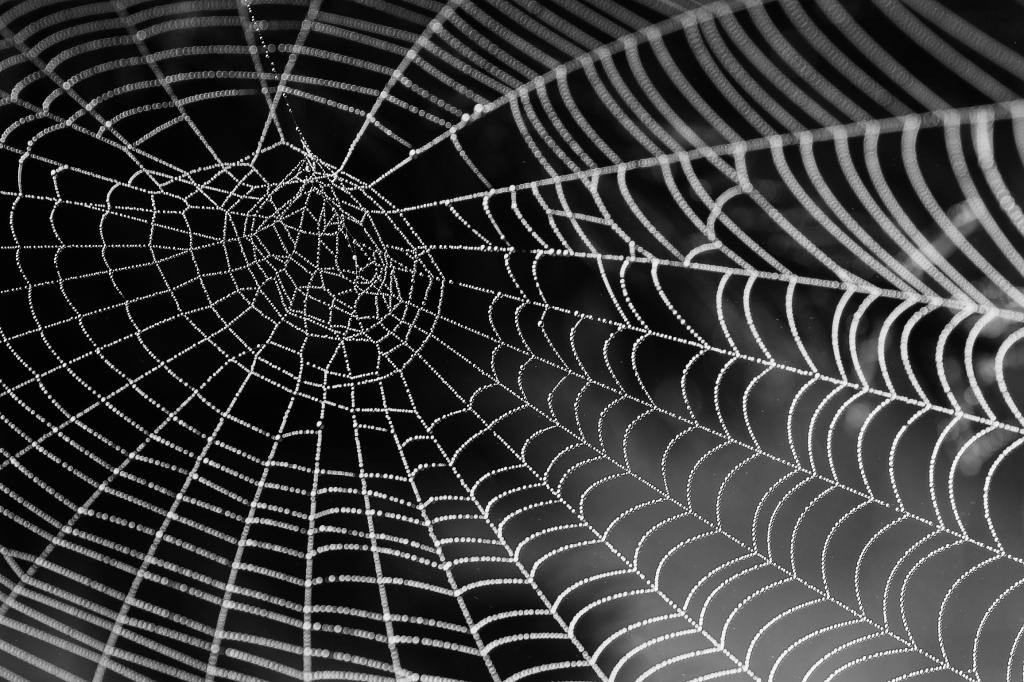
It scuttled back and forth beside her sink, eight beady eyes trained on her, glinting in the dim yellow light of her apartment.
She approached. Her fingers trembled. The spider lifted a single leg to rest against the supple flesh of her pointer finger. A whisper of touch.
Kris would normally locate something sturdy and crush the bug. But this night, she thought of Daniel, of his reaction if he found out she killed it. This was her ticket back to him. She trapped it beneath a glass and slid an unopened credit card offer beneath, lifting the spider to the window. It skittered into the cool, turned back to her, and went on its way.
Nearly a week elapsed before Kristiana encountered another spider. She thought it must be a different spider altogether; it was larger than the one she’d released.
But much like before, it teetered back and forth on the worn countertop, eyes volcanic black and locked on her. Longing. Kris laughed and felt an odd wave of affection. She mimicked the spider’s innocent zig zag. A novel instinct purred through her, the desire to nurture. But she had no idea how to care for a spider.
Again, she carefully captured the creature. It seemed to allow this, remembered her care in its previous release. Kris sighed as it parachuted down through the air, at first hanging by a gossamer thread, and then melting away into darkness.
She began thinking about her spider at work. Mindlessly scanning groceries, eyes glazed over. She wondered what it would be like to have eight of them, eyes and legs, how fast she could bag for the customers, how much of the world she would see.
Kristiana was not an observant person. It was Daniel’s perpetual criticism, how she seemed to ignore their sign for the exit on the highway, how she missed even the most blatant social cues. How she could never understand what he truly wanted from her, and by the time she figured it out, it was too late.
Not her fault, but too late all the same.
She’d only seen the spider twice and already she felt a warmth that had been missing from Daniel, from his touch, for a very long time.
One night she returned to her dusty apartment and was met by an even larger spider. It had returned, and it had doubled in size, big as her palm.
She was overcome by the urge to call Daniel.
“Has it visited you, too?” she’d ask. “It’s half yours, after all. Don’t you see? It’s the eyes. The hair is the same color as yours, the curls on your head, the tuft over your sternum. It has my legs: spindly, never quite smooth. You see it, don’t you?”
Its eyes were large enough for Kristiana to see herself distorted in the gleaming darkness. It came back. She’d wanted it to.
She reached for the phone. This spider was what Daniel wanted, everything she could never give him. Something to call theirs. Something she finally noticed.
She dialed his cell, hands twitching, the spider studying her. It rang twice and went to voicemail. Daniel might never be ready to talk.
Kris found a clear bowl and set it down over the spider. It complied when she slid a Thai takeout menu beneath wiry legs.
And then it was gone again and she wished nothing more for the spider to turn and leap back through the window. But she couldn’t protect it. She would only end up hurting it—her, she decided—and she couldn’t accept something so precious into her life only to see it ruined.
She woke the next morning to an unusual weight on her chest. Kristiana cracked open her eyes and came face to face with an enormous tarantula. She lay still, the spider rising and falling with her breath.
Kris looked into the spider’s eyes and saw Daniel so obviously reflected. Though the shape of her made Kris shiver, there was also beauty. She carried both of them in her body. Proof they had once been in love. All the parts of them combined and multiplied, limbs and eyes and love to the second power.
The spider crawled into her palm, legs hanging off the sides of her hand. A blessing against her flesh.
Kris swung her legs out of bed and brought her to the window. She clung to Kris’ hand and shivered with the cool breeze. Kris prodded her back and coaxed her onto the ledge, then closed the window with a remorseful sweep. For a moment the spider rested her front legs against the glass, then turned and was gone.
Kristiana crawled into bed and pulled her legs to her chest, her two legs, and she cried.
“I’m not coming back.” Daniel’s voice was a bone saw on her fragile eardrums.
“Please,” she begged, “I can’t do this without you.”
“Kris, we both saw those tests results. Whatever this is, it isn’t mine, and it definitely isn’t yours. You’re losing it.”
When Kris saw the spider once more she had grown again, a glorious, furry arachnid with a body the size of a kitten. She sat in the middle of Kris’ living room, bathed in dusk gloom.
Kristiana sniffled and set down her keys. She withdrew the sharpest knife from her drawer and made an incision, a lurid smile across her abdomen. She lay down in a pool of her own blood. Her spider crawled near.
She waited.
Nathan King is a recent graduate of Sarah Lawrence College’s MFA program. Their short fiction has appeared in LEVEE. Find them on Twitter @nathan___king (3 underscores!).
In the Ray’s parking lot a Door Dash driver’s bag ripped open and a dozen gyros (?) rolled into the handicap space while a plaza security guard stepped around a fella blowing chunks to retrieve a runaway grocery cart. Crows know where to shop
Will Schmit is a Midwestern folk poet transplanted to the redwood forests of Northern California. Will’s most recent recording Fix My Car can be streamed at Spotify, iTunes and at schmitbooks.com
the light shines but we do not heal. in the village no one skips a meal to gossip about the losses, or call the missing ones a thing, or edit the tenses behind their name. grief is a journey & i, a fatigued traveler, wrestling a mental plummet. it was yesterday & she was fifteen, brown-skinned & blossoming with ambition. offer me a moment of silence: it doesn’t compensate for the absence, but i’ll manage. the two things you learn about living: (i) nothing escapes the wingspan of light, except the body; (ii) darkness fades in a blink, light too. but what do i know about living to dispense survival tips. i, living by the swing of a wall clock. our uncle, self-appointed therapist & leader of a hopeful bunch, recommends confessions. repeat: the light is bright & full of wholeness, the light is bright & full of wholeness. i am deserving of wholeness. i am deserving of wholeness. see?
Michael Emmanuel is a creative writer from Lagos. His works have appeared in The Shore, trampset, Ake Review, Jalada Mag, Afritondo, and other places. He is on Twitter @mikey_emmanuel.
This is a deeply personal story about how the Centers for Disease Control and Prevention (CDC) ruined my life. Let it be known that I am a big fan of vaccines—I have many of them and love them all. I also support prescription drugs – again, I am on many of those and they are lifesavers – although I do not support Big Pharma.) I will not be covering the scope of the CDC’s horrific failings: see the AIDS epidemic (see this letter from Act Up San Francisco in 1988 https://aep.lib.rochester.edu/node/49111), the COVID pandemic, etc. No, my beef with the CDC is, as I noted, personal and specific.
There is a silent and fatal pandemic sweeping the US and overseas. It is a tick-borne illness called Lyme Disease (Borellia). I, unlike the average person, know the mind-numbingly catastrophic effects Lyme and its oft-ignored co-infections can have. I am living it. The CDC, however, thinks I am faking.
The first time I was diagnosed with Lyme Disease, I was 12 years old. I grew up in Boston and on Cape Cod in Massachusetts, an area known for its massive tick population. I knew what Lyme was before I was diagnosed. It was a frequent occurrence in my life for people to find ticks on themselves and go on a quick preventative course of antibiotics if the tick tested positive for Lyme or if they had a certain rash(https://www.bbc.com/news/health-47198019). My diagnosis did not fit either of these criteria. Rather, I had recently suffered a traumatic brain injury, which severely weakens the nervous system and thus the immune system, and when I took a test for Lyme, I had a few markers for the Lyme infection. In fact, according to the CDC, I did not have enough markers to warrant a diagnosis based on the tests; rather, my diagnosis came from the inconclusive tests and my suggestive symptoms.
Fast forward a decade. Yes, ten years. I am 22. I have spent time in a mental hospital. I am on psychiatric drugs. I have such severe migraine disease I almost dropped out of college. I am unable to exercise due to fatigue and had to quit my elite college sport. I have gained weight and lost muscle mass. I can barely work part time. I give myself a shot of anti-CGRP medicine once a month (migraine preventative drug) and I get 40 shots of Botox in my face, head, and neck every 12 weeks. I have a severely limited diet. I developed obstructive and central sleep apnea. I have extreme GI issues. I am not getting better.
I was fed up and hopeless. Doctor after doctor had no idea what to do with me. Most of them told me to do intense exercise three times a week to lose weight and that would fix me! As many spoonies (https://www.patientsrising.org/what-is-spoonie/) have experienced, my tests all came back “normal.” No iron deficiency, no thyroid issues, no endometriosis, no Ehlers-Danlos, no more Lyme disease (ostensibly), and the list goes on. But I knew something was wrong. So I went back to when everything started deteriorating–Lyme and my concussion. I decided it was time for a Hail Mary. Thanks to @tickbootcamp on Instagram and the Global Lyme Alliance, I was able to find a Lyme-literate doctor close by.
I had been right all along. Not only did I still have Lyme (almost definitely the same infection I had when I was 12, including at least one more infectious tick bite), I had two other severe tick-borne illnesses I had never heard of; babesiosis and bartonellosis. A host of other issues came to the surface as well. Finally, finally, finally, all my symptoms made sense.
Back to the CDC—this will get technical. When Lyme was discovered in the late 20th century, the CDC set the standard that in order to test officially positive, five “bands” had to be labeled as “reactive” on the Western Blot test. The Western Blot is taken, in fact, to confirm the results of the first test your doctor gives you, called an ELISA. However, ELISA tests have terrible sensitivity and only give accurate results 35-50% of the time in early cases, which is when most people test. Yes, you read that correctly. Try to understand how insane that is; you might as well flip a coin if you have certain symptoms to decide whether or not you have a possibly fatal infection. (https://www.columbia-lyme.org/diagnosis)
The CDC is doing nothing about the negligent standard of ELISA test, which, once again, has the accuracy of a flip of a coin. Imagine if that’s how accurate MRIs were, meaning brain cancer could only be diagnosed with a 35-50% accuracy rate. They also have not reworked their requirement for five reactive bands on the Blot test either, despite the fact that hundreds of Lyme researchers, doctors, organizations, and patients (like myself) have proved that 3 bands is adequate. In fact, you could theoretically test negative on the ELISA but still have five or more reactive bands—but it wouldn’t matter because doctors take the ELISA as gospel. From 2011 to May of 2021, I only ever had three reactive bands, and my ELISA test was always fairly inconclusive. In fact, once I started treatment this year, four bands started reacting because the spirochetes (Lyme bacteria) were exiting my tissues after being buried there for ten years, flooding my bloodstream and showing up on the Blot. Yet, I still do not pass the CDC’s litmus test.
Because of this, most of my doctors and medications are not covered by insurance. I have spent thousands and thousands of dollars since my fateful and horrifying diagnosis less than a year ago trying to get back on top of things (I say back on top as if I had a life before Lyme and its little sneaky friends, when really I was only a child). Let me be crystal clear; if I was not able to afford this treatment thanks to my family and how we have unfairly benefited from capitalism, I would be dying soon. The bacteria would have continued to eat into my nervous system, brain, and spinal cord. I possibly would have become paralyzed (something I have shockingly avoided so far). My digestion would have continued to fail. I likely would have developed a severe auto-immune disease, of which I am already on the verge. I would not have been able to advance in my career. I probably wouldn’t have been able to live independently anymore, which is already difficult and only possible again thanks to my family’s financial resources. And did you know that if you are on disability insurance and get married, you lose your benefits?
This is why it is just about impossible to be disabled and not support universal healthcare. It is the core of why I am a socialist. It is why, when the CDC and the Biden administration tells us we only need to quarantine for five days after testing positive and acknowledges the standard is changing simply to save the economy because everyone will get COVID eventually anyway, I cry, then laugh, then scream (https://thehill.com/policy/healthcare/587553-cdc-comes-under-fire-for-new-covid-19-guidance). They are making a mockery out of disabled people who, as always, bear the brunt of their negligence, who are stuck without treatment for half of their lives while diseases eat their brains and destroy their futures, who are stuck at home because the public don’t care if they die, who cannot afford the medically-accurate non-covered treatments and die as a result. The CDC ruined my life, then radicalized me, and I am only 23.
Lilian McCarthy (she/they) is a queer and disabled academic living in Dublin, Ireland.
Growing up in the Deep South, you are born surrounded by ghosts. Now it’s not something that is even debated or spoken about in certain company, just a known fact. You can’t throw a stone in a crowd and not hit someone who hasn’t seen or heard something, or at least knows a first-hand account of someone else’s experience. I, personally, love ghost stories, and I don’t mean the manufactured ones that Hollywood drums up to sell tickets, but the real ones. The stories that are told over cups of brown liquor at cookouts when the sun has dropped to a sliver on the horizon and all the food is ate. When all the babies are sleep in one bed and the older kids sit on porches under yellowed lights, the smell of banked charcoal, citronella candles, cigarette smoke and Budweiser hanging in the air like a perfume, giving the night an ethereal quality. Like for just this little while, your thoughts can bring ideas to action, things that go bump in the night are just outside of your peripheral vision and the stories told from the Great Uncles lips are painted in your mind’s eye with such vivid strokes, you’d swear you was watching a movie and just forgot what channel it was on.
Those stories that are ingested in the cool breeze blowing through Spanish moss and palm trees. These are swamp stories, of my few times Great granddaddy, Captain Red, being led into mangrove trees and never seeing daylight again. Or my grandmama, working night shifts as a nurse and having one those turn of the century nuns walk past her in an empty hallway. These are tales of my bloodline, that holds within it unequal shares Mansu Musu and Irish potato farmers. Slave memories that still whisper up from plantations both near and far, that speak to me, DNA deep, even here in the mountain ranges. Flawda stories that still tug on me, still I can hear the calling of the junebugs under the twilight haze, hear crickets playing songs for the frogs and fish to dance to. I can still smell the river, as it winds past the graveyard where my mama lay, I can still feel the grass under my feet. Taste the sweet dates and the bitter bullet fruit fresh off the bush. Flawda stories, full of ghosts both real and imagined and impossible possibilities.
There lived a man, who doesn’t like being photographed, who dodged and avoided being filmed. To forbid the whole world to remember him, he evaded every chance, every camera, lens, or even the eyes of his loved ones. Never he visited lands, never met people twice who know his name but constantly tried in vain to erase the idea of him being alive. For he thinks, that if he isn’t alive ideally, he isn’t ever going to die. When the world saved their beautiful photographs framing, photo composing their immortality, to be remembered and loved for generations and generations, for whom they are and what they represent, to leave a mark on this planet, our hero didn’t exactly care what they were thinking. Tired of people’s theatre, he burnt all his bridges of bondings.
Our man decided something that you and I shudder to attempt. To be honest, even if others plead with him not to wake up, but sleep on weekends. He affirmed ‘Let them snap if they want. I’ll mind my own business. Maybe they don’t know, I might be a chosen boy.’ So just like that, he never cared for a photograph of him ever later. Not even when he felt extremely happy and when he wanted the world to see how much he was satisfied with life. Evolved to be a rebel, he continued living his youth. Stopped caring about the way he looked. Ceased believing in the photographs, even when people died for one. He believed in verses and wrote love letters to the women he loved. And in words and spaces between the sentences, he lived. That made him reach places he had never been to. Back and forth, fantasies, or reality, he dwelled there by following this protocol.
And years sprouted and fell. He still didn’t have any pictures taken. While the world cared more to save their treasures, imageries where they showed the world, how much they’re happy and thirsty for sex, he found it all null. Nobody tried to understand him nor did they care for him. When everyone is grouped to take a
picture, he bends over backward to blur out himself, so as not to get captured, leaving no traces for them to judge. He deleted his photographs from the web, which ensembled his fruitful youth. Why did he stop caring? The whole world wondered. He lost interest in a mere life but he strived for something beyond the 2-d or 3-d spaces in which he has been. He surpassed his whole adult life not taking a tiny blink. Is it just a matter of degrees of freedom?
Now, the oldness clenched him closer. Without denying it, he gracefully embraced. Ten thousand and seventy-seven gammas aroused emitting from him burnt every eye. The town chief and the old king heard about this infamous man. The king announced bounties for capturing the shine of this graceful man who ever lived. Many cameras were positioned at different angles like sniper guns, to kill his grace by their mere lens. They failed to capture when the film got unfocused every time. They couldn’t understand that he was a cursed man. Whenever the camera eyes looked at him, he cringes at them so badly, that tears drop out from them and their necks get choked. They tried everything to capture his photograph. Alas! They weren’t aware of the curse for they lived in a rational world where curses are fictionalized.
He demanded one day in the morning that, despite his age, he will appear for them when it was time for the world to see him although photographic snipers should be resigned. The king accepted his behest and summoned him to his palace to talk with this man. He walked through the streets with the most gracefulness that the king ever saw in his lifetime. The king adored him with utmost worship.
“Look beyond your damn photograph”, advised the man.
“What do you mean, ten thousand and seventy-seven gamma man ?”
“Delete your worthless pictures, break your unclear mirrors, donate your filthy throne and shave your balding head. And, ask yourself for once and real ‘who am I ?’ ”, and
he left the room quickly without continuing further. The old king stood there bamboozled.
And many days later, a foul stench aroused, spreading through the whole city. When the people found its origin, it had been a week already. With the body resting on a sofa, flesh eaten by ants, bones revealed, the gamma man lay peacefully dead near his written love letters, with his half skull revealed. He deceased in his room alone. Finally, the photographic snipers captured his picture. The town forever remembered his photograph phrasing “The man who never surrendered to a photograph. However, death defeated him.” The cameras guffawed hysterically from the background, while the old king stood beside with a shaved head.
Aswin Melepatt is an aspiring Indian English writer from Kerala, India. He is a data engineer by profession and loves to travel, read, meditate and have a warm tea.






 Unstamatic