The floods were here, back with vigor And the country drowned in water No hope for the destitute victims Their eyes turning white and the lives going in shambles
“Water everywhere but not a drop to drink” Warned the wise to depict the future’s brink We knew it would come sooner or later But were not prepared to cater
The filibustering will continue as the hopes here shatter For this is what happens in matters that matter The conferences will be conducted and campaigns run With actions too little too late to save the soil’s daughter and son
Muhammad Abdul Basit is a political scientist and freelance journalist. He writes on international relations and sociopolitical issues. Instagram: abdul_basit0419
Has a history of repeated assault: five women counted, with others still unknown. Finger missing a nail, comes with a slight tinge of acid and has been previously used for occasional shit wiping. Can be salted, deboned, stuffed and sewn erect. Wrapped and sealed in cruelty-free packaging.
And all bidding starts at zero, with nine more primed for a fresh cut.
Option for body to be included.
With more to come.
There is more to come.
Moriam E. Kuye (she/her) is a British-Nigerian writer who enjoys roller skating on a sunny day. She mostly likes and retweets on Twitter @moriam_emi.
Ashley Robles is an artist currently residing in San Antonio, TX, a UT Austin alum, and is working to normalize chronic illness in her corporate & creative life. She can be found online @mzashleypie
It was a special day for the young Unicorn, too special to wait for the Sun to rise. As its eyes opened, it looked at the valley, still shining thanks to the silver light of the Full Moon and the ten thousand stars above the clouds.
Ever since it was nothing more than a Foal, the young Unicorn had been told about an important event which it was destined to participate in: warning every other living being in the valley about the arrival of a new era. Every Unicorn was destined to live through such a day at least once in their millenary life, so everything had to be perfect.
After getting up, it looked at the river at its left. It was clear for everyone that the young Unicorn was different from the others, for its body resembled other animals even more than other unicorns.
Its tail, slick and furry, was identical to that of the Bulls happily walking around the grassy fields of the valley. Its belly was as yellow as the Crocodiles which inhabited the very river whose clear waters it was staring at. Its body was green and had hundreds of scales, like the ones that decorated a Snake. Even its face had two long barbels, like those of a Catfish.
There was only one key detail that made it recognizable as a Unicorn, and that was its magical horn, sharp and shiny. It was able to reflect the sunlight, making it seem like golden flames were surrounding its body as it dashed through the valley in joy.
However, as it took a look at its body, the young Unicorn widened its eyes, in fear. The horn was gone! There was nothing in the middle of its head, not even the signs of something breaking off of it, almost as if there had never been a horn there in the first place.
That concerned the Unicorn, especially because it was only a matter of hours before the Sun was going to rise. How could it warn about the arrival of a new era, if nobody was going to recognize it?
In a hurry, it looked back and forth, left and right, hoping to find someone already awake. There was a small white Rabbit, sitting in the grass. The Unicorn asked it about the horn, but the Rabbit admitted to have spent the entirety of that night admiring the Full Moon, as it was preparing some magical medicines from the herbs it had collected from the surrounding area.
Still, the Rabbit warned the Unicorn about trying to step inside the forest, where it would have found something. Not what it was looking for, but what he needed to find.
The Unicorn, hearing those cryptic words, decided to follow its advice. After all, with no one else awake to help it, what could it have done?
At the entrance of the forest, it noticed someone staring at him with a curious smile. It was a bird, a Night Falcon to be precise, peeking through its small nest.
As the Night Falcon was welcoming the Unicorn inside, it decided to ask the bird about the horn. However, the avian admitted to be too shy to even see what is going on in the valley, so it barely understood what happened. Still, someone did warn the bird about sending a special creature inside.
Before the young Unicorn could even ask what did the Night Falcon mean, someone else approached the other creatures. It was a Deer, an old Deer, looking as much in a hurry as the Unicorn was.
The Deer, with no hesitation, explained that, in order for the special event to happen, the two of them had to reach the Boulder of a Thousand Horns, in the middle of the forest. As such, it showed the way to the Unicorn, as they both walked across the trees, under the shiny moonlight.
After a few minutes, the old Deer and the young Unicorn had both made it to a place where a tall rock, as wide as ten of the surrounding trees, was standing. There, many horns were placed, all belonging to ancestors of the Deer.
Indeed, it explained to the Unicorn that, whenever an important day was about to begin, every Unicorn would lose its horn, for it had to be replaced with one of those Deer horns. It was a signal, part of the ritual to indicate that the Unicorn was now ready to fulfil its destiny. However, no one had ever explained that to the young Unicorn, hence it was not prepared.
The Deer, yet, did not seem to be bothered. After all, the Sun had yet to rise, so there was still time. It gently woke up a Monkey, resting on the other side of the boulder. The Monkey was aware of how to perform the magic ritual to attach the horn on the Unicorn’s head, so it hopped on the Deer’s back, as they all ran back into the valley.
There, the Rabbit welcomed all three of them with joy. All those hours spent collecting the herbs were not in vain, as they were essential for the ritual. As such, they all stood in silence, as the Monkey attached some of the herbs on the end of the horn, while others were put on the Unicorn’s forehead. After a few minutes, the new horn was ready, and, once the Monkey had removed all the herbs, it seemed as though it had always been there.
A few moments passed when the first rays of sunlight emerged, and they hit the horn, which reflected them on the ground. The ritual had worked.
Jumping around with joy, the Unicorn was thankful to all the other beings, as it readily began to run towards the other end of the valley.
The beginning of a new era was upon everyone. Flowers blossomed, birds chirped, animals sang. The Rabbit and the Monkey cried with pride, as the Night Falcon decided to overcome its fear and soar across the sky.
Only the old Deer seemed saddened by that event, for its duty was now over.
Still, as the young Unicorn warned about it, everyone was waiting for what was going to happen, now that there was the chance to start anew. Happiness had surrounded the valley.
Decades ago, my maternal grandfather Rodolfo laid down tracks for the railroad — in the summer, in the winter, in the bitter-biting Chicago cold.
He would come home chilled through to the bone some nights, so frozen he wouldn’t even relinquish his coat. When he did, there was a ritual:
My grandmother would pour a measure of his favorite blackberry wine into a little plastic cup: yellow and transparent as stained-glass Christmas stars, the perfect size for a child’s grasping hands. He would take it and he would drink, until the alcohol sailed down his throat and settled like warm sunbursts at the core of him. Only then could he shrug off his coat, and his day. Only then could he return to the land of the living. Anabasis, it’s called. Return from the
underworld. Persephone, come back to life.
I have sipped from that cup, in an apartment that looked like a jungle, in a neighborhood called the Back of the Yards, the sort of place that inspired The Jungle — or its writer, at the very least. History adorned in its walls, the history of twelve children, the history of family — a
sprawling indoor tree, both improvident and impossible in its excess; rainbow-bright caged parrots I used to believe were real; varnished wooden mariachis; stairs slanted above a laundromat, too tall for little legs and no grandfather to lift me up them. Because by the time I could stand and climb, he was gone. Only the cup remained. So I drank from it, in communion, like the wine that warmed him from the inside out, the wine that allowed him to take off his coat and feel like a person again.
The same wine I’d planned to give to you.
Cheap wine, too sweet, my favorite. Such an easy exchange. Four dollars for my history. Four dollars for my family. Bottles wasted on shelves in supermarkets; all I wanted to do was keep you warm. My hug in a glass. Tipping down your throat, in your belly, my ancestors in a sip. This is the blood of Christ. This is my blood, too.
But you didn’t want it. You didn’t want me. Love bubbling out of me, bursting at my precious unzipped seams, the richness and pigment of blackberry wine. You’re the only one who’s ever refused.
How hard is that — Merry fucking Christmas?
The apartment is sold now. The yellow cup is gone. My grandfather held me as a child, he must have. I don’t remember holding him. I just remember holding you.
Perhaps you’ve taken those trains. Walked over the tracks he touched. I hope so. It would make me feel better. See the tracks at least, if you can’t try the Manischewitz.
The man my mother loved the most — yes, more so even than her husband — was him. She tells me I inherited his auburn hair. She says this with such bittersweet dreaminess, such heart-rending nostalgia. She tells me his cheeks tickled pink when she presented him with her ultrasound. Twins, like he was. Me and my sister. How he loved my mother, his youngest daughter, his last of twelve. How she loved him.
Like a president had died, she tells me of his funeral. A pillar of his community. He helped build the neighborhood church, worked on carnival rides, threw Tex-Mex parties — bruised his fingers, froze his bones. He was one of those good, upstanding men you hear about — well, heard about. Not anymore. They’ve gone extinct, I think. I don’t know anyone like that. I used to think you were one. I certainly wanted you to be.
That was unfair of me, I know now. You are just you. And that’s always been enough.
But I wanted you to be to me what he was to my grandmother, and to my mother. Beloved. I wanted my mother to meet you. I wanted her to adore you. She would have. How could she not? I did.
Her on the phone at your apartment, worried for me, do you remember? The closest she got to meeting you, her echo a tinny voice while I listened, telling me to be safe. I can’t remember if I shed a tear in your shower, but it was a close thing. Couldn’t get the water to turn off, or the sink to drain. Remnants of your stubble on the tile. No tissues. You don’t cry? Or perhaps you don’t wipe your tears away. Perhaps you simply let them fall.
Beautiful, wild mane of hair, thick hands and fingers, broad enough to encompass me. Sleeping beside you was like sharing a bed with a tame lion. Apartment like a shoebox, barely big enough for your cat — I don’t know how it fit you.
It fit me, though. Pillowed on your chest. The first man I have slept beside. I didn’t sleep at all, though. I absorbed your warmth like wine. And I didn’t sleep a wink.
You had a table in your apartment that looked just like my grandfather’s. Glass panels I used to sit underneath, panels the size of grandchildren, the size of plates filled with tamales and the hope for seconds, and thirds. Beautiful red ornaments I remember on the tree in December. So grand, they looked. I wanted to look at them forever. Merry Christmas.
I say my grandfather. But in my memory, the apartment was only ever inhabited by my grandmother. Too young to remember his wine, or his twin, or his auburn hair.
But oh, I remember her.
She would sit me on her lap and call me mija. Everything smelled like mold. A bathroom so small you could barely turn around in it. Thirty miles in a car, my father in his rusted purple van I spilled ink in the backseat of, bundling up three little children, taking us through space and time to the jungle in the Back of the Yards: crunching gravel parking lot, a bribed attendant, us clambering up all those stairs to my grandmother wreathed in black.
After he died, she wore black. Every day, every night. Jet-black hair she made my uncle take her to weekly appointments to maintain, black shoes, black creased pants, black button-down shirt, and — because she was that sort of woman — red lipstick.
Car ride, gravel, stairs, jungle, mija. Black hair, black shoes, black pants, black shirt.
Each visit the same. Every birthday, every Christmas, every ‘just came to say hello.’
Car ride, gravel, stairs, jungle, mija. Black hair, black shoes, black pants, black shirt.
A decade of mourning without a color palette.
But then came spring. Then came a car ride, gravel, stairs, jungle, mija. Then came black hair, black shoes, black pants, black shirt —
With white flowers.
A polyester pattern, like a particularly macabre vacation shirt. I didn’t know what to make of it. But it stuck with me. It seemed significant.
Our next visit, much of the same: Car ride, gravel, stairs, jungle, mija. Black hair, black shoes, black pants, black shirt —
White flowers.
As if she knew she was going to see him again.
‘Together in Paris,’ proclaimed a movie we watched — Anastasia with my head in your lap, while they two — him and her — sat together in paradise.
A summer funeral; prayers at camp. I cried. A decade without her soulmate. A decade of black shoes.
God, how terrifying to love someone that much. God, how I wanted that with you.
Because that’s what love is, to me:
White flowers.
A bouquet of white roses I imagined in my hands. I never indulged in this fantasy as a child, like many girls do. I couldn’t envision walking down the aisle — all powdered cheeks, all pressed lace — to meet a faceless man.
But you. I imagined it with you. The aisle. The dress. Your smile. A future. You turned your head once, I can’t remember where, and the light hit your hair and for a second it looked white. I had the future in my grasp and it shined like roses.
Beautiful idiot, a phrase you introduced me to once. Should have known you were talking about you. Should have known you were talking about me.
I would have been a good wife. Would have mourned you for a decade like her. Maybe longer, even. Black is a small sacrifice for eternity.
But I don’t want that aisle or those flowers. Well, I do. God, do I want an ‘I do.’ God, do I want a love as deep as roses, as Manischewitz, as a wardrobe that looks like death.
But not yours. I don’t want your kisses now, but I do want your hugs. I don’t want your body, but I do want your mind. Friendship is such a devastating thing to take away from someone. Bereft does not contain the horror of a scar in my heart. Maybe katabasis does. That
means falling. It means packing my wounds like meat, Upton Sinclair couldn’t have predicted this. Who knew ten months could leave such an impression? Feet on hardwood, pencils pressing on pads. Frozen mariachi smiles. A decade of black hair dye.
I think I might love you forever. Manischewitz leaking out of me — not romantic, but the kind of love that has nowhere to go, that doesn’t demand kisses or touches, only time. The sand I still find in my bookbag, remnants of our days at the beach. The ghost of hugs you gave me, the tacky warmth of your skin. The painting you did, back in our summer of endless promise. The kind of love that comes from fruit, from fruitfulness, from family, from four dollars. Blackberries reaching toward sunlight. A bottle of wine at Christmastime.
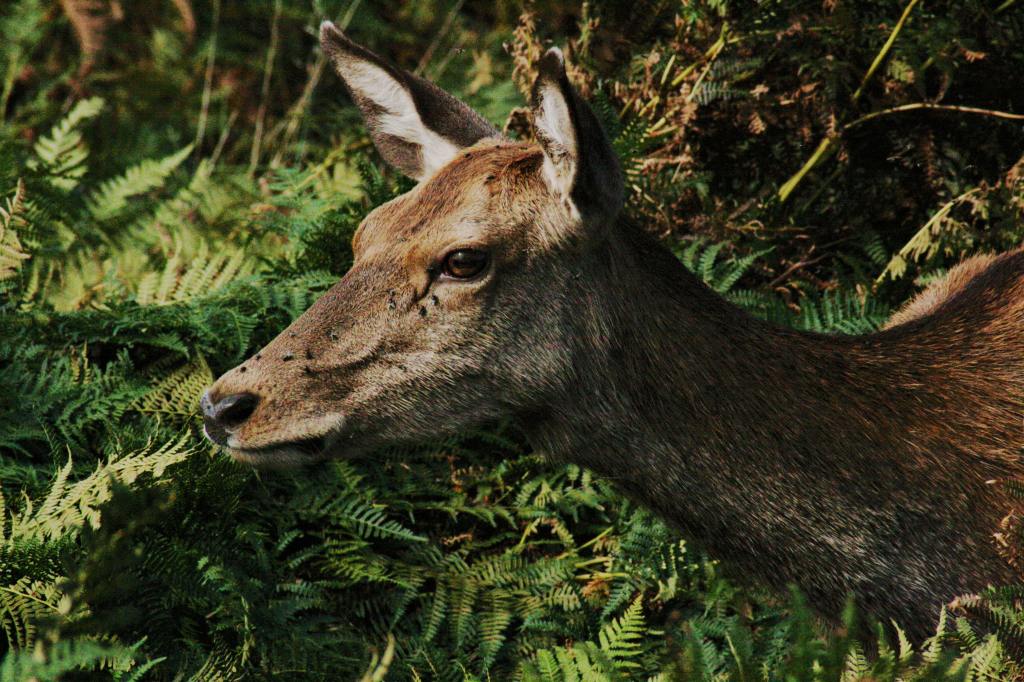
I saw a doe today She trod the fine line That runs along the forest’s edge Where wildflowers cease And water-hogging sod sits Perhaps she ventured solo To the outskirts of the human zoo Or other deer waited just beyond the brush To hear her recount the peculiar nature Of the bipedal neighbors Creatures so quick to bring her brothers to his knees Creatures so quick To lodge a bullet in whom they please
Stephanie is a recent graduate of the University of Central Arkansas. Her work has been published by 501 Life Magazine, The Vortex Magazine of Literature and Fine Art, Reedsy, and Haunted Words Press.
you promised me heartbreaking works of staggering genius. you told me everything was illuminated. you promised me freedom, purity, and corrections.
you promised no more virgin suicides, no more marriage plots, no more rules of attraction.
we’d be on the road, in the post office, eating ham on rye. we’d measure time in fight clubs, lullabies, white noise, and by the evening redness in the west.
you promised me only revolutions, inherent vice, infinite jest.
you told me they would know our velocity, that we’d feel it all, extremely loud and incredibly close.
To all the friends I made in my twenties
Sometimes–albeit rarely–but especially when one is young, Revelry is the verso face of misery and Terror. –Jordy Rosenberg, Confessions of the Fox
sing to me of candy-colored years– all those stumblings are sepia now. I want to write. I want to call. I scroll instead.
how many likes does it take to say I see you; I need you to see me like you used to but not like that, like now, like you’d see me if you saw me now.
have we grown or just kept going?
I was all sad-girl stammer, shy and shambolic, phony, frenetic, sultry shutterbug, camera shy (except when alone). gruff and untethered now I float more like a leaf than a balloon those ties somehow impossible to fully sever.
here I am in the Texas sun, there you are in Utah. New Orleans. Chicago. New York. Portland. Minneapolis that fabled bay I’ll never deserve but you just TOOK.
first thoughts aren’t always best thoughts, but revisions aren’t always improvements.
moments come unconnected. pearls don’t stay on the string but scatter like pool balls at the break. we disperse like stars or planets after the big bang throws us all into orbit but gravity– cheesy as this metaphor is– holds us in place keeps space in between but moves us in relation to each other.
Laura K. Wallace, AKA Lola or Wally, is a bookseller/recovering academic in Austin. this is their first poetry publication. insta and twitter: @lolaleviathan https://tinyletter.com/feelingofgaze
There cowed deep A mouse Part inside out our landlords cat Shoulder deep to the toe Viscera bleeding into the soul
Peter Richardson (they/them) is a happenstance of meat and energy. Peter is mostly silent, uncomfortable with touch & full of love. Other labels for them are synesthete, ace, enby. @muddyfox50
——–Don’t flex————– just say get on my level stay on the grind working those two jobs no days off no insurance no time with your kids ——–Don’t flex————– just take that gym pic caption it with a muscle emoji pick up that extra shift when someone says I’m tired —————-Flex————– Tell them you don’t get days off —————-Flex————— Say I’m built different ——Be—Built——Different— Tell them it’s for the family you never get to see
if you wanna be a hustler break yourself apart like a bill & then try to spread the change far out enough to be happy
Kevin Sanchez graduated from the University of Arizona with a B.A in English and Creative Writing. He is currently a high school English teacher in Tucson, Arizona, writing in his free time.
I’m black brushstrokes on canvas, a shade shy of a feverish confession but a tone bold enough to remember the ruse when a crowd approaches.
I blur into a bruised blue, gush into a gratifying green, and morph into
a yellow that pours blinding lightness into a crowd, who is too distracted to discover I’m black brushstrokes on canvas.
Aysha Mahmood is a Pakistani and Dominican writer based in Connecticut. She is the editor of a nonprofit, and her writing has appeared in Huffpost, Teen Vogue, and Nylon. IG: @ayshamahmood93!
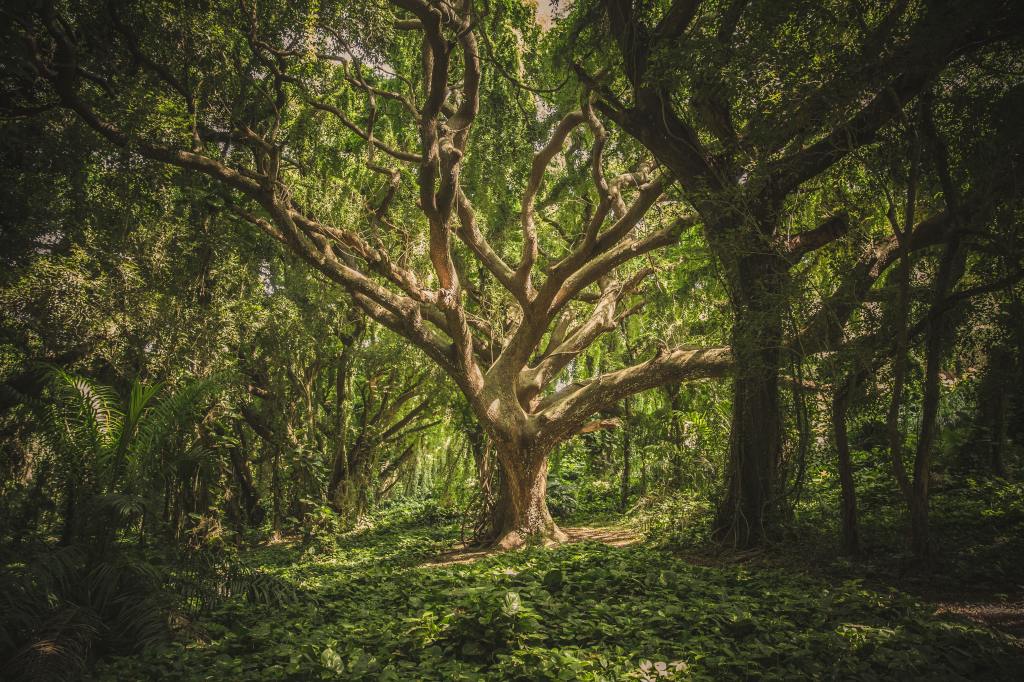
I dream a koan a grove of olive trees boughs swaying no angels
here fruit falling from branches words falling beyond language
is this Eden or the pain of Gethsemane your olive trunks guard
a wooden silence you burned the canvas anointed those
trees with fire named all that nothing my master piece and then you left
David M. Brunson’s work has appeared in Copper Nickel, ANMLY, Booth, and elsewhere. He is the translator of A Scar Where Goodbyes Are Written (LSU Press 2023). https://twitter.com/David_M_Brunson





 Unstamatic